


Know Exactly What’s Biting – A 12-Month Fish Guide.
Meet The Redfish
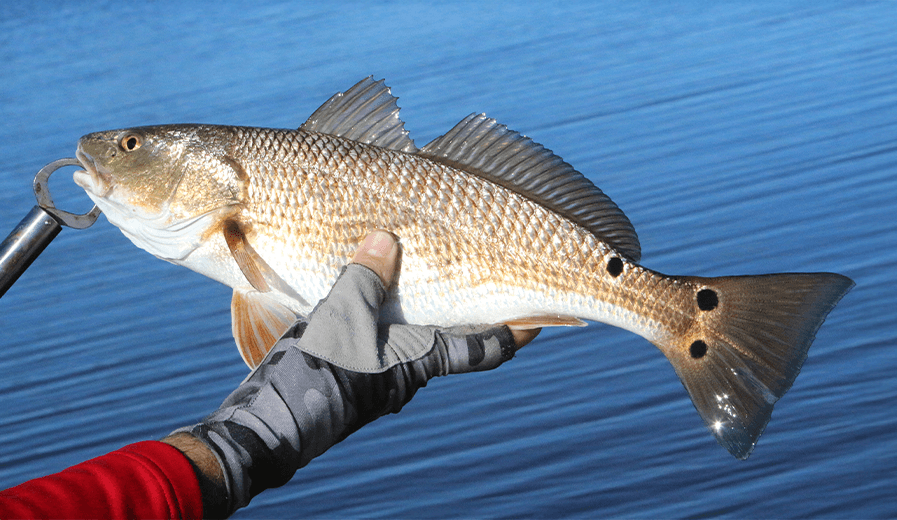
Powerful, bronze-backed, and famous for their unmistakable black tail spot, Redfish (also called Red Drum) are one of the most exciting inshore species you can catch near Port Sanibel Marina.
Fish Finder
Live Feed "fish Hot Spots"
The Numbers
Quick Facts
Sciaenops Ocellatus
18–30 inches
Up to 60+ inches
4–15 lbs
20–50+ lbs
94 lbs 2 oz
30–40 years
August–November
1–100 feet
68–85°F
“Mild, slightly sweet, with a firm, large-flake texture”
Near Port Sanibel Marina
Where to Find Redfish
- Shallow grass flats
- Mangrove shorelines
- Oyster bars
- Sand potholes
- Residential canals
- Inlets during the spawning season
Fall:
Prime season for schooling Redfish
Spring:
Excellent shallow-water action
Summer:
Early morning and late evening bites
Winter:
Deeper channels and mud flats
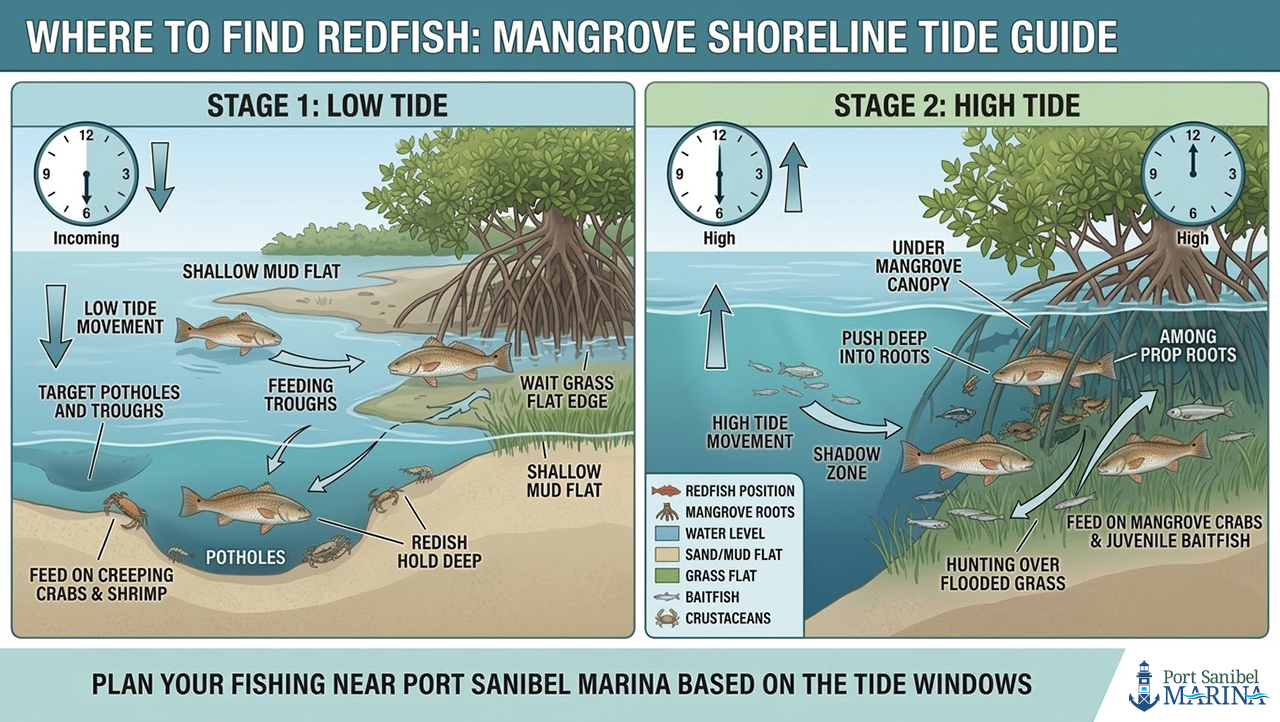
Redfish love moving water.
Outgoing tides along mangrove shorelines near Port Sanibel Marina often concentrate bait, and where there’s bait, there are reds.
Look for “tailing” Redfish in shallow water during calm mornings. Their tails often break the surface while feeding.
Redfish habitats
Shallow grass flats, Mangrove shorelines
Tactics & Gear
How to Catch Redfish
Recommended Gear
Recommended Gear
Artificial Lures
Artificial Lures
Live Bait
Live Bait
Beginner Tip
Cast beyond the fish and retrieve slowly through their path. Redfish feed nose-down and will often pounce as the bait crosses their line of sight. Enjoy the catch!
Advanced Strategy
Sight fish during calm conditions. Polarized sunglasses are essential. Target subtle movement, mud puffs, pushing wakes, or tail flicks will guide you to their proximity.
Redfish are aggressive feeders and will hit both live and artificial presentations.
Year-Round Calendar
Seasonal Redfish Guide
Fish move shallow. Clear flats offer prime sight fishing with artificial lures.
The bite is heating up near the mangroves.
Cool air wins. Fish hunt early before midday heat drives them to deep channels and shade.
Have an early start to beat the sun for the best bite.
Large schools gather. Spawning season near inlets brings chances at massive “bull” Redfish.
This is prime time.
Deep holes hold fish. Slow lures on warm mud flats trigger strikes in the chill.
Patience pays off for winter Reds.
Setup for success
Gear & Tackle
Rod:
7’ to 7’6” medium or medium-heavy spinning rod (fast action preferred)
Reel:
2500–4000 size spinning reel with a smooth drag system
Main Line:
10–20 lb braided line (15 lb is a versatile choice)
Leader:
20–30 lb fluorocarbon leader (2–3 feet in clear water; longer if fish are pressured)
Artificial Lures:
- 3–4” soft plastic paddle tails (natural colors: white, new penny, root beer, gold glitter)
- Gold spoons (weedless models work well over grass)
- Topwater plugs (bone or natural baitfish colors) during low light
- Suspending twitch baits for slightly deeper water
Live Bait:
- Shrimp (free-lined or under a popping cork)
- Pinfish
- Cut mullet
Whether you’re wading the flats or fishing from a boat, patience, stealth, and attention to tides will significantly improve your results. With the right gear and timing, the Port Sanibel area can deliver unforgettable Redfish action. Tight lines!
Artificial Lures:
- Make quiet approaches in shallow water — Redfish spook easily.
- Use polarized sunglasses to spot fish and structure.
- Cast beyond the fish and retrieve naturally through the strike zone.
- Adjust retrieve speed based on water temperature (slower in cooler months).
Plan your fishing
Live Weather & Ocean Tides
Redfish Fishing Season
Catch & Release
Redfish Rules
Size Limit (Total Length)
*Must release all fish over 27" ("Bull" Redfish)
Required Gear
Best Practices
Florida Fishing Seasons
Conservation & Regulations
Redfish management has helped rebuild populations dramatically.
- Florida has a protected slot size (varies by region).
- Bull Redfish over slot must be released.
- Use circle hooks when fishing with natural bait.
- Support local conservation efforts.
correct way to hold a Redfish
Conservation Message Effectively
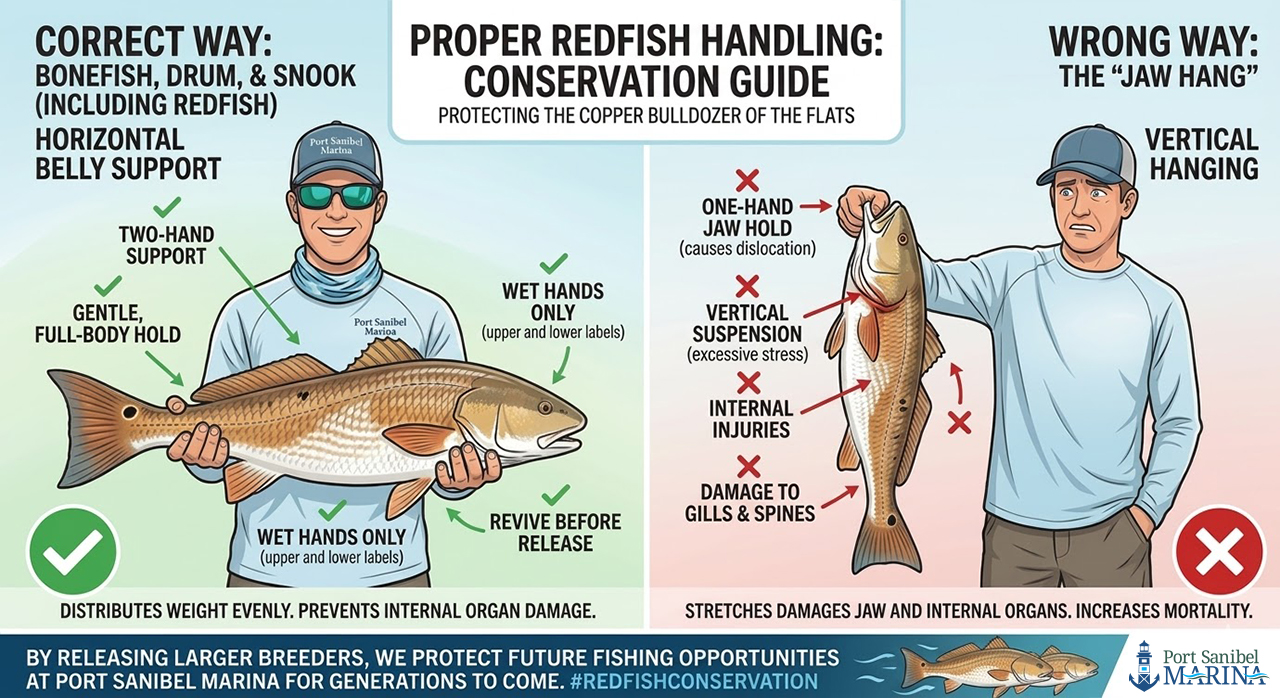
Redfish Drumming
Redfish Audio Clip
Our Location
Dry & Wet Docking
3 Delicious Redfish Recipes
From Dock to Dinner
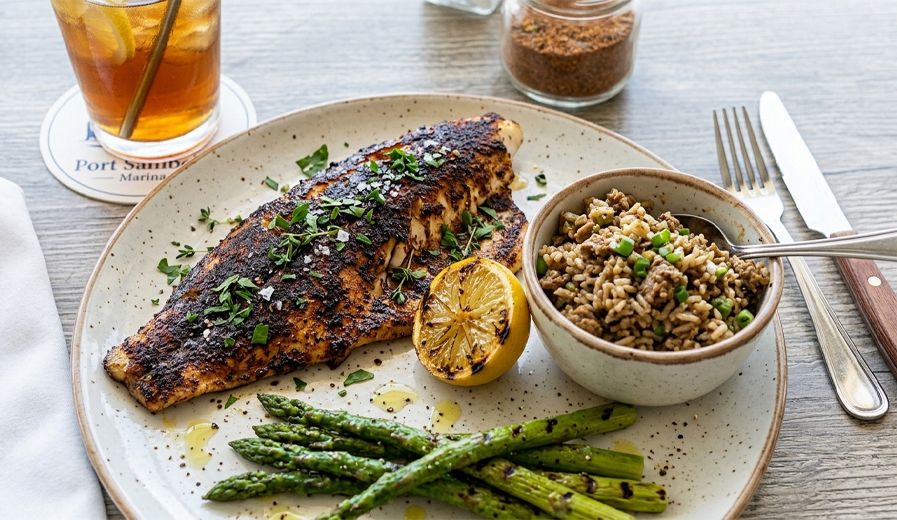
(Florida Classic)
Bold, spicy, unforgettable.
Ingredients
- Redfish fillets
- Cajun seasoning
- Butter
- Lemon wedges
Preparation
- Heat cast-iron skillet until very hot.
- Coat fillet in seasoning and sear 3–4 minutes per side.
Serve with
Dirty Rice
Grilled vegetables
Pro Tip
Marina’s Pro Tip: Use high heat and don’t move the fillet while searing.
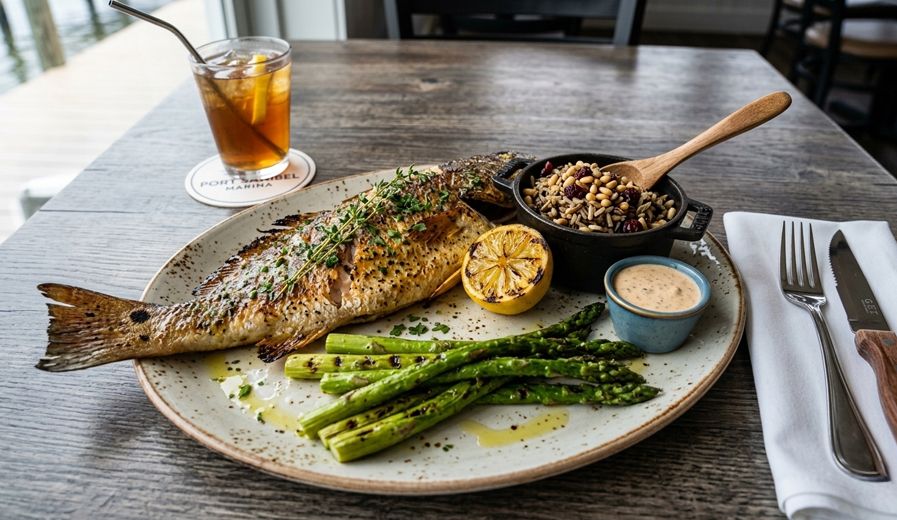
On the Half Shell
Grill with skin and scales intact to lock in moisture.
Brush with
- Garlic butter
- Fresh thyme
- Sea salt
Preparation
- Grill skin-side down 6–8 minutes.
- Finish with fresh lime juice.
- Perfect for outdoor coastal evenings.
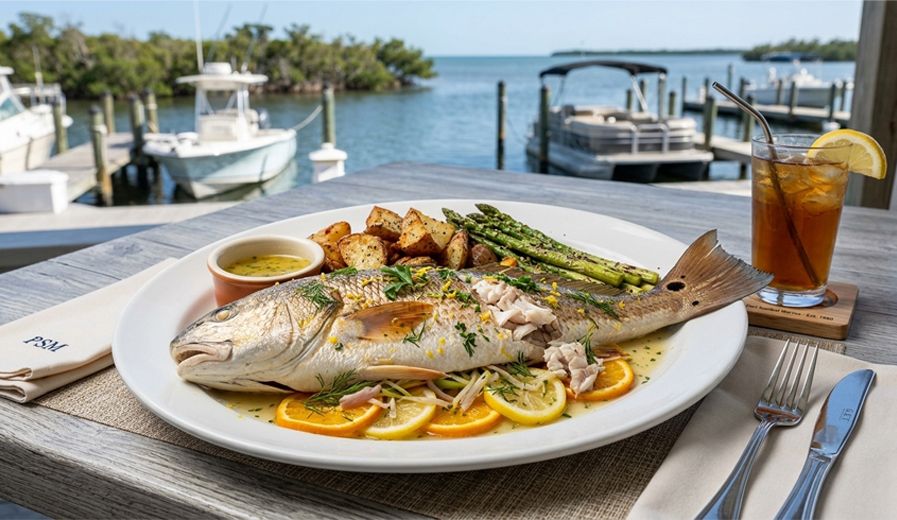
With Citrus & Herbs
Light and Refreshing.
Ingredients
- Orange slices
- Shallots
- Fresh dill
- Splash of white wine
Preparation
- Bake at 400°F for 12–15 minutes.
Serve with
Steamed Asparagus
Roasted Potatoes
Did You Know?
Redfish Fun Facts
01
The black spot near the tail is thought to confuse predators.
02
They produce a “drumming” sound using muscles against their swim bladder.
03
They can live over 40 years.
04
Massive “bull” reds migrate offshore to spawn.
05
They tolerate a wide range of salinity, from brackish to near freshwater.
06
They can grow over 45 inches long.
07
Many Redfish have multiple tail spots, though one is most common.
08
Juveniles prefer shallow estuaries, while adults often move offshore.
09
Their copper color becomes brighter in clear water and darker in murky water.
Fishing Experience
Angler Spotlight
“Sight-casted to a tailing Redfish on the flats near Port Sanibel Marina – the fight was incredible!”
– Brendon M., Georgia
Have Redfish Questions
We Have Answers
Peak Times and Seasonal Cycles
While Redfish are available year-round in Southeast Florida, the late summer and fall (August through November) are considered the absolute peak. During this window, adult “Bull Reds” migrate toward inlets and nearshore reefs for spawning, making them more aggressive. In the winter months, focus on sunny afternoons when the sun has had time to warm the shallow mud flats.
Navigating Water Levels and Current
Most experienced anglers prefer the incoming tide, especially the first few hours after low tide. As the water rises, Redfish move from deeper troughs onto the flats and into mangrove roots to hunt for crustaceans. Conversely, a falling tide can be productive if you “intercept” them at the mouths of tidal creeks as they are forced back into deeper channels.
Finding Fishable Structures and Flats
In Southeast Florida, you should look for “skinny” water containing seagrass, oyster bars, or mangrove shorelines. Areas like the Indian River Lagoon and the backcountry of the Everglades are world-class hotspots. Always look for “signs of life” such as nervous water, baitfish jumping, or “tailing” fish where the Redfish’s tail breaks the surface while it feeds on the bottom.
Matching the Hatch for Red Drum
Redfish are opportunistic feeders with a “bulldog” mentality. For live bait, shrimp and finger mullet are the gold standard; fish them under a popping cork to attract attention. For artificial enthusiasts, a gold spoon is the most iconic choice due to its flash in tannin-colored water. Scented soft plastics, like Gulp! shrimp, are also highly effective for bottom-bouncing.
Staying Legal with Slot and Bag Limits
For 2026, Southeast Florida falls under specific FWC management zones with strict rules to protect the population. Generally, the “slot” limit requires fish to be between 18 and 27 inches to be kept. Most of the Southeast region is limited to one fish per person per day. Always check the latest FWC “MyFWC” app before hitting the water, as some areas may be catch-and-release only.
Have Additional Questions?
We Can Help.
- Fishing questions
- Boat rental, bait, weather, and location